
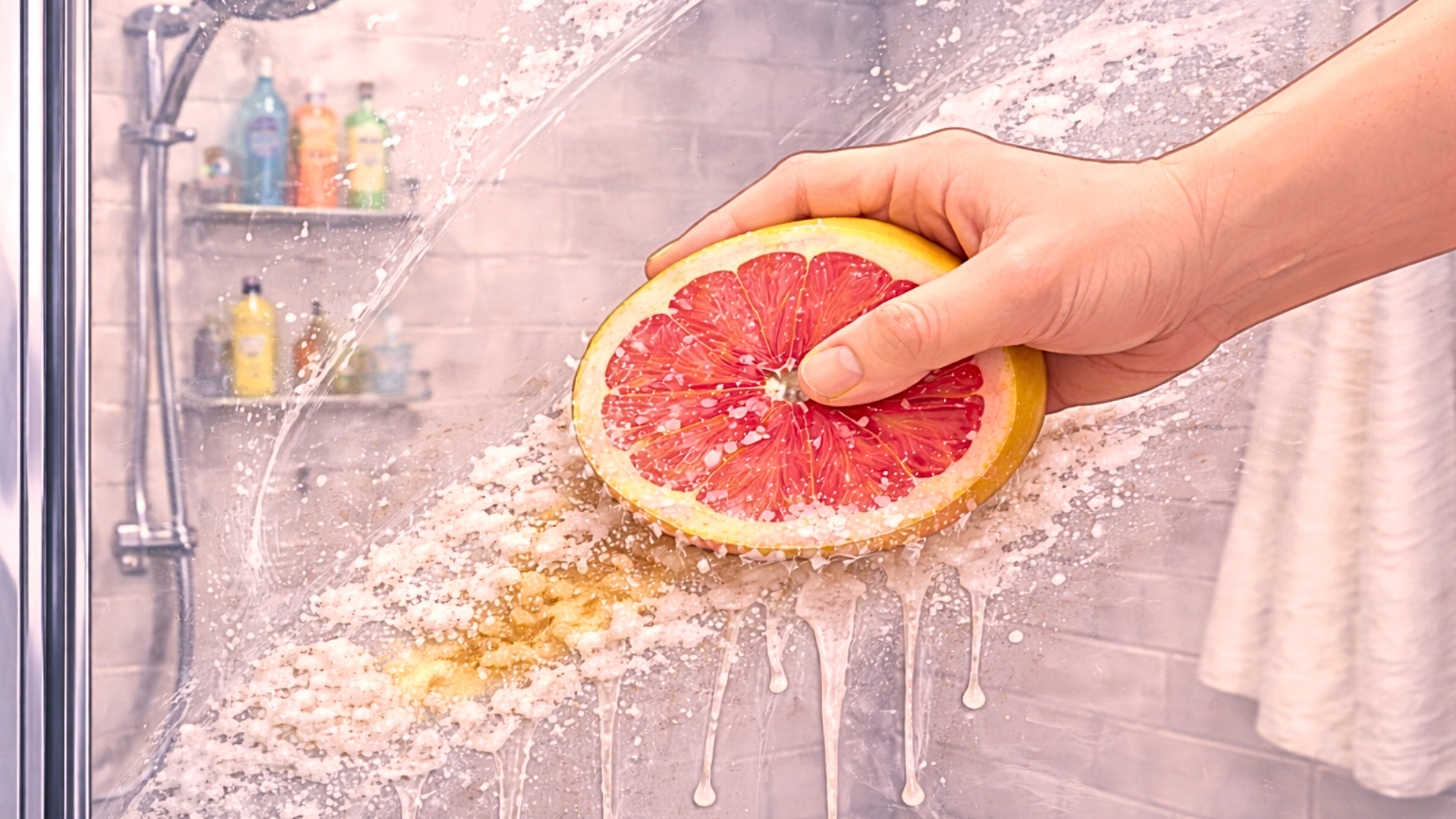
When it comes to the toughest room in the house to clean, the bathroom usually takes the crown. Between stubborn soap scum, hard water deposits on glass, and grimy grout, it’s tempting to reach for the harshest chemicals available. But what if the secret to a professional-grade deep clean was sitting in your fruit bowl?
Grapefruit isn’t just a healthy breakfast—it’s a formidable cleaning agent. Because it is larger and more acidic than a lemon, it provides more juice and more cleaning surface area to tackle bathroom grime.
In this guide, we’ll dive deep into why this citrus giant works and how to use it in every corner of your bathroom.
The Science: Why Grapefruit is a Cleaning Powerhouse
Grapefruit contains a high concentration of citric acid, which acts as a natural chelator. This means it bonds with minerals like calcium and magnesium (the stuff that makes water “hard”) and breaks them down.
While lemons are great, the sheer volume of juice and the thickness of the grapefruit rind provide a mechanical advantage when scrubbing.
Additionally, the limonene found in the rind is a powerful natural solvent. Limonene is frequently used in industrial cleaners because it effectively cuts through the fatty acids found in soap scum, body oils, and even some types of mildew.
When you clean with grapefruit, you aren’t just making it smell good—you are performing a chemical reaction that dissolves dirt.
Preparation: What You’ll Need
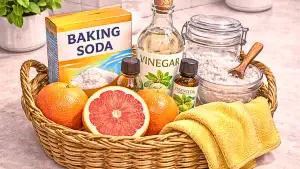
Before you start, gather these natural supplies to maximize your cleaning efficiency:
- Large Ruby Red or Pink Grapefruits: (2-3 for a full deep clean).
- Coarse Salt: Kosher salt or sea salt works best as an abrasive.
- Baking Soda: For deodorizing and added “fizz” power.
- Distilled White Vinegar: To create a long-lasting cleaning concentrate.
- Microfiber Cloths: For streak-free polishing.
- A Squeegee: Essential for shower glass maintenance.
Step-By-Step: The Ultimate Bathroom Deep Clean
1. The “Magic” Bathtub & Shower Scrub
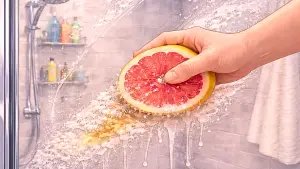
This is the most famous grapefruit hack for a reason. It works better than many store-bought abrasive pastes without scratching the surface.
- What you need: 1/2 grapefruit and 1/2 cup coarse kosher salt.
- The Process: Wet your bathtub or shower floor. Sprinkle the salt generously over the surface. Use the grapefruit half as a scrubbing pad, squeezing slightly as you go to mix the juice with the salt. The abrasive salt plus the acid creates a scouring paste that lifts grime instantly.
- Pro Tip: For extra stubborn rings around the tub, let the salt and juice sit for 5-10 minutes before doing your final scrub. Rinse thoroughly with warm water.
2. Restoring Crystal Clear Shower Doors
Tired of that cloudy film on your glass? Hard water spots are just mineral deposits that grapefruit acid loves to eat.
- The Process: Mix 1/4 cup of fresh grapefruit juice with 1 cup of water in a spray bottle. Spray the glass and let it sit for 3-5 minutes (don’t let it dry completely).
- Use a soft sponge to wipe in circular motions, then squeegee the liquid off. The natural oils in the grapefruit provide a slight water-repellant coating that prevents new mineral spots from forming as quickly.
3. Faucet and Chrome Polishing
Remove those white crusty deposits (limescale) around your fixtures without using corrosive chemicals that can damage finishes.
- The Process: Take a slice of grapefruit and rub it directly onto the faucet, handles, and showerhead. For stubborn buildup at the base of the tap, wrap a juice-soaked rag around the fixture like a compress and let it sit for 10 minutes. Rinse and buff dry with a clean cloth to achieve a mirror-like shine.
4. Natural Toilet Bowl Freshener & Whitener
Skip the bleach and use the power of natural effervescence to lift stains.
- The Process: Pour 1 cup of grapefruit juice into the toilet bowl and follow with 1/2 cup of baking soda. The mixture will foam up—this is the CO2 helping to lift surface debris.
- Let the foaming action work for at least 15 minutes. Scrub with a toilet brush, focusing on the waterline where minerals collect, and flush.
5. Grout Brightening and Mildew Prevention
Grapefruit juice can help lighten stained grout lines and inhibit the growth of common bathroom molds.
- The Process: Apply undiluted grapefruit juice to the grout lines using an old toothbrush. Let it sit for 10 minutes to penetrate the porous surface. Scrub vigorously and rinse. The acidity helps kill surface spores and brightens the cement between tiles.
Safety and Surface Care: A Word of Caution
While grapefruit is natural, it is still an acid.
- Avoid Natural Stone: Do NOT use grapefruit (or any citrus) on unsealed marble, granite, or limestone. The acid can “etch” or dull the surface permanently.
- Test First: Always test a small, inconspicuous area when cleaning colored plastic or vintage fixtures to ensure no discoloration occurs.
Long-Term Maintenance: The “Grapefruit Vinegar” Spray
Don’t throw away those rinds! You can make a powerful daily maintenance spray.
- Place leftover grapefruit peels in a glass jar.
- Cover with white vinegar and seal for 2 weeks.
- Strain into a spray bottle and dilute 1:1 with water.
- Use this daily to mist your shower and sink to keep bacteria and odors at bay between deep cleans.
Frequently Asked Questions (FAQ)
Q: Does it matter which type of grapefruit I use? A: Not necessarily, but Pink or Ruby Red varieties often have slightly higher oil content in the rinds, which can be better for degreasing.
Q: Will the juice leave a sticky residue? A: If rinsed properly with warm water, no. The citric acid actually helps remove other sticky residues (like hairspray) from your countertops.
Q: How often should I do a grapefruit scrub? A: For a busy family bathroom, a deep scrub once every two weeks will keep minerals from building up to the point where they require heavy scrubbing.
Conclusion: Why Switch to Citrus?
Transitioning to a grapefruit-based cleaning routine is about more than just a clean tub. It’s about:
- Health: Reducing the “toxic load” in your home by eliminating synthetic fragrances and bleach.
- Aromatherapy: The scent of grapefruit is scientifically linked to reduced cortisol levels and improved mood.
- Sustainability: Reducing plastic waste by using compostable “scrubbers” (the fruit itself!).
Next time you’re at the market, grab a bag of grapefruits. Your bathroom—and your lungs—will thank you.

Comments are closed.