
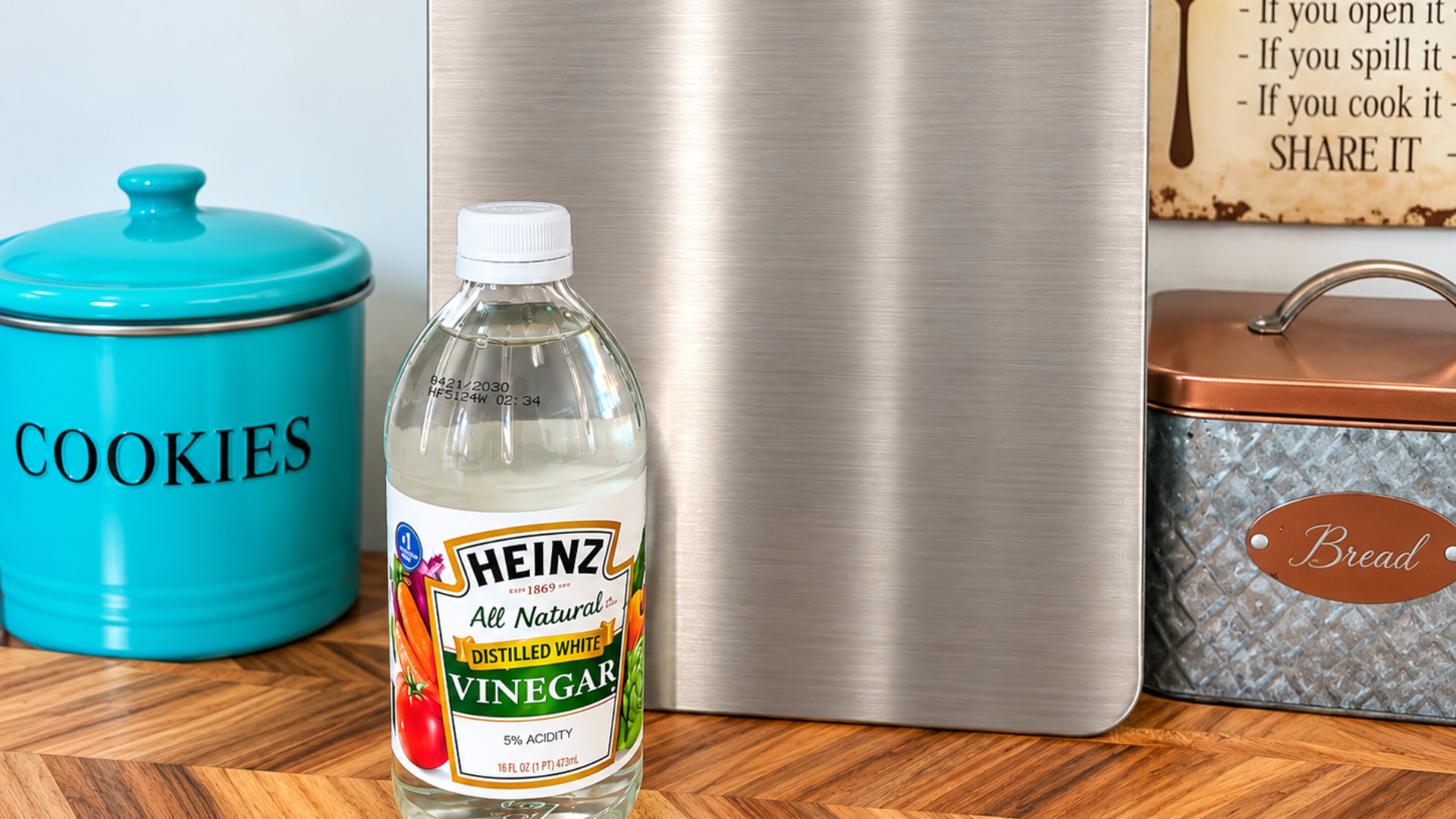
I am sure you have a bottle of vinegar in your home right now, but did you know vinegar doesn’t only belong in the kitchen? It belongs in your cleaning caddy, too!
White vinegar is one of those simple household products that can help you clean so many things without spending money on a different cleaner for every room.
In this article, I am sharing 20 amazing vinegar cleaning hacks that you probably didn’t know about. From cleaning stainless steel to removing stubborn bathroom stains, these simple home cleaning tips are worth trying.
So, without further ado, let’s dive in!
20 AMAZING Vinegar Cleaning Hacks:
1. Clean Stainless Steel Cutting Boards With Vinegar
This is one of my favorite new vinegar cleaning hacks. I recently used white vinegar to clean my stainless steel cutting board, and I was surprised at how beautiful it looked afterward.
How to use: Mix equal parts white vinegar and warm water. Dampen a microfiber cloth and wipe your stainless steel cutting board, following the grain. Rinse thoroughly with clean water and dry immediately with a soft towel.
For boards used to prepare raw meat, wash and sanitize according to food-safety recommendations.
2. Make Stainless Steel Appliances Shine
Are your stainless steel appliances covered with fingerprints and watermarks? Try this simple cleaning trick.
How to use: Mix one part white vinegar with two parts water. Lightly dampen a microfiber cloth, wipe in the direction of the grain, and dry immediately. Use only on appliances whose manufacturer approves vinegar, especially if they have fingerprint-resistant coatings.
3. Clean Laminate Kitchen Countertops
Vinegar can help remove light grime and everyday stains from certain laminate countertops.
How to use: Mix one tablespoon of white vinegar with two cups of water. Wipe the countertop with a soft cloth, rinse, and dry. Test first and avoid soaking countertop seams.
Never use vinegar on marble, granite, limestone, or other acid-sensitive natural stone.
4. Freshen Certain Sealed Wooden Furniture
Not all wooden furniture should be cleaned with vinegar. However, some furniture with a durable, intact polyurethane finish may tolerate a very diluted solution if the manufacturer approves it.
How to use: Mix one teaspoon of vinegar with two cups of water. Test underneath the furniture first. Lightly dampen a soft cloth, wipe gently, and dry immediately.
Avoid unfinished, waxed, oiled, antique, or damaged wooden furniture. For most wood finishes, mild soapy water is the safer choice.
5. Remove Soap Scum From Glass Shower Doors
Soap scum can make beautiful glass shower doors look cloudy and dirty.
How to use: Mix equal parts white vinegar and warm water in a spray bottle. Mist uncoated glass shower doors and leave for 5–10 minutes. Wipe with a nonabrasive sponge, rinse thoroughly, and dry with a microfiber cloth.
6. Clean Bathroom Shower Tiles
If your shower walls are covered with light soap residue, vinegar may help loosen the buildup.
How to use: Mix equal parts white vinegar and water. Lightly spray glazed ceramic or porcelain shower tiles, avoiding grout lines. Wait five minutes, wipe with a soft sponge, rinse, and dry.
Do not use this method on natural stone tiles.
7. Remove Buildup From Shower Heads
Have you noticed your shower head spraying water unevenly? Mineral deposits could be blocking the tiny openings.
How to use: Mix equal parts vinegar and warm water. Spray the shower head and allow it to sit for 10–15 minutes. Gently scrub the nozzles with an old toothbrush, rinse with warm water, and run the shower.
Check the manufacturer’s instructions first, especially on specialty finishes.
8. Remove Hard Water Stains From Faucets
White mineral deposits around faucets can be stubborn, especially in homes with hard water.
How to use: Apply diluted vinegar to a soft cloth and wipe compatible chrome or stainless steel faucets. For stubborn deposits, let the damp cloth rest on the spot for a few minutes. Rinse and dry.
For any remaining grime, use a little baking soda mixed separately with water to make a paste. Avoid abrasive scrubbing and delicate plated finishes.
9. Clean Around Kitchen Sink Faucets
The area around kitchen faucets collects water spots, dried soap, and grime that can make the sink look dirty.
How to use: Dip a soft toothbrush in equal parts vinegar and water. Gently scrub around the faucet base, keeping the solution away from natural stone counters. Rinse well and wipe dry.
10. Remove Light Stains From Sealed Grout
Grout lines can become discolored from dirt and everyday foot traffic.
How to use: On intact, sealed cement grout, first test a hidden area. If the manufacturer permits vinegar, briefly dab a little diluted vinegar onto a stained spot, gently scrub, rinse immediately, and dry.
For regular grout cleaning, baking soda mixed with water is a safer choice because repeated vinegar use can weaken cement grout.
11. Freshen a Smelly Toilet Bowl
A toilet can sometimes develop unpleasant odors from mineral deposits and residue beneath the waterline.
How to use: Pour one cup of white vinegar into the toilet bowl. Let it sit for 15–20 minutes, scrub with a toilet brush, and flush.
Vinegar can help with some odor-causing deposits, but it is not a disinfectant.
12. Remove Toilet Bowl Mineral Stains
Have you noticed yellowish or brownish mineral stains inside your toilet bowl?
How to use: Pour one to two cups of white vinegar into the bowl, making sure it reaches the stained area. Leave for 30 minutes, scrub thoroughly with a toilet brush, and flush. Repeat for stubborn mineral deposits.
Never mix vinegar with bleach or other toilet cleaning chemicals.
13. Clean Glass Windows Without Streaks
One of the easiest ways to clean windows naturally is with a simple vinegar and water mixture.
How to use: First, remove dust and loose dirt from the windows. Mix equal parts white vinegar and warm water in a spray bottle. Lightly mist the glass, wipe with a clean microfiber cloth or paper towel, and dry completely for a crystal-clear finish.
14. Make Bathroom Mirrors Sparkle
Bathroom mirrors can quickly become covered with toothpaste splashes, fingerprints, and water spots.
How to use: Remove any dust first. Mix equal parts white vinegar and warm water. Lightly mist a microfiber cloth rather than spraying directly onto the mirror. Wipe the glass and immediately dry with a second clean cloth.
Keep moisture away from the mirror edges and backing.
15. Remove Certain Laundry Odors
Sometimes clothes can develop unpleasant smells that ordinary washing doesn’t completely remove.
How to use: For washable, colorfast cotton clothing, mix half a cup of white vinegar into one gallon of cool water. Soak for 15–20 minutes, then wash according to the care label using regular laundry detergent.
Always test delicate fabrics first.
16. Help Soften Stiff Hand-Washed Towels
Too much detergent residue can leave towels feeling rough and stiff.
How to use: For sturdy, hand-washable cotton towels, add a quarter cup of white vinegar to one gallon of clean rinse water. Swish the towels briefly, rinse again with clean water, and dry as usual.
Avoid routinely adding vinegar to washing machines unless the manufacturer specifically approves it, since acidity may affect certain seals.
17. Remove Some Light Carpet Stains
Vinegar may help with certain water-soluble carpet stains, but it is not suitable for every carpet.
How to use: First, blot up the spill. On manufacturer-approved synthetic carpet, test equal parts vinegar and water on a hidden area. Lightly dab the stain, blot with a clean cloth, then dab with plain water and blot dry.
For some lingering surface grime, baking soda can be used separately after the area dries. Avoid vinegar on wool, silk, and other acid-sensitive fibers.
18. Remove Limescale From Electric Kettles
If you frequently boil water, you may notice a chalky white buildup inside your kettle.
How to use: If your kettle manufacturer allows vinegar, add equal parts white vinegar and water, enough to cover the mineral deposits. Leave for 15–30 minutes, empty, and gently scrub if needed. Wash accessible parts with a little Dawn dish soap, rinse thoroughly, and boil fresh water once before using.
Do not immerse electrical components in water.
19. Loosen Dried Food Inside the Microwave
Food splatters inside the microwave can become difficult to remove once they dry.
How to use: Place one cup of water and two tablespoons of white vinegar in a microwave-safe bowl. Heat for two to three minutes, watching carefully. Leave the door closed for another few minutes, then remove the bowl carefully and wipe the microwave interior with a damp cloth.
20. Remove Odors From Glass Jars
Those empty food jars are great for storing things around the kitchen, but sometimes they hold on to strong food smells.
How to use: Wash the jar with dawn dish soap first. Add equal parts white vinegar and warm water, let it sit for 15 minutes, then empty and rinse thoroughly. Allow the jar to air-dry before reusing.
Final Thoughts
Now that you have learned 20 different ways to clean with vinegar, I am sure you will be reaching for these cleaning hacks every time you clean your home.
From making stainless steel shine to tackling hard water stains, these simple vinegar cleaning hacks can make everyday household cleaning easier without buying so many different products.
Just remember that vinegar is not suitable for every surface, so always check the material and test a small area first.
The next time you reach for that bottle of white vinegar in your kitchen, remember that it can do much more than add flavor to your food!
You May Also Like:
20 Epic Vanilla Home Cleaning Hacks You’ll Wish You Knew Sooner

Comments are closed.